I had a draft of this post ready a few days ago, and then saw that The New Yorker published a piece called Astrology In The Age of Uncertainty. It’s a bit of a fence-sitter, but with good reporting, so here are bits I liked from it, as a preface to what I had written.
It’s commonplace to say that in uncertain times people crave certainty. But what astrology offers isn’t certainty—it’s distance. Just as a person may find it easier to accept things about herself when she decides she was born that way, astrology makes it possible to see world events from a less reactive position. It posits that history is not a linear story of upward progress but instead moves in cycles, and that historical actors—the ones running amok all around us—are archetypes. Alarming, yes; villainous, perhaps; but familiar, legible.
(…)
[Chani] Nicholas believes that astrology appeals because it gives “context” to people and to world events. Like religion, it says that there is something beyond material existence, but it doesn’t teach dogma, or prescribe action. Many astrologers I interviewed expressed concern that astrology can be misused to generate fear or to extort, but mostly, Nicholas said, it’s a way of “framing the thing we’re in.” As humans, she said, “we need rhythm. We need ritual. We need timing.”
When I was a little girl, one of the routines my parents followed on our annual trips to Bangalore was visiting the family astrologer. My mother carried three notebooks, each one of which contained our birth charts, which had been drawn when each of us was born, and which Gopal – the astrologer – interpreted every year. He followed the Vedic tradition, and offered my parents both encouragement and caution. I, of course, remember nothing because I was not allowed to sit in on these sessions, but I would hear my parents reference snatches of his advice as they made decisions all year long. At some point, my father decided this was not for him, and eventually those couple visits stopped, but I think my mother continued to chat with Gopal once in a while over the years before giving it all up, too.
I, though, developed a fascination for and interest in astrology that has only grown over the years. I am not interested in its predictive nature, let me clarify. What draws me to it is this simple truth – as above, so below. We are, after all, creatures of the planet, and whether we are in touch with this core belief or not, our moods, bodies, energies, and lives are influenced by what happens on the earth, in the oceans, and up in the skies. I know this sounds so woo-woo, but bear with me, please.
As I have learnt my sun sign, moon sign and rising sign, and I follow the work of Chani Nicholas, Jennifer Racioppi, Rebecca Gordon and Susan Miller, I’ve felt more prepared to deal with what comes my way.
The trick is not use astrology as an excuse or shield, but as a tool. It’s not for everyone – I’ll be the first to admit that – but I do like understanding the landscape of each week, month and year. Once you have the information you need about which planets are in retrograde or clashing or in harmony with others, when the new moons and full moons are, and how each eclipse will affect your chart, you begin to make some sense of what might otherwise seem unfathomable.
There are so many resources made available now by very generous and qualified professionals, who take the time and energy to share their knowledge. I love all the women I’ve mentioned above, and the one thing I do is keep a moon diary. New moons are for setting intentions, and full moons are for letting things go, and taking stock. I started my diary two years ago and follow a very simple routine – I record what’s working and what’s not at that time in my life, and then set an intention or let something go. When I look back now, I can see where a shift started, or a pattern started to emerge or disappear. It also helps me keep track of why I wanted something and why I rejected something else.
At the end of the day, as Jennifer R says, success – however you choose to describe it – is a rhythm, and not a race. And for me, knowing where the stars and planets are at is an essential part of that staying n sync with that rhythm. Whenever I fall out of tempo, which I inevitably do, having this tool available to me helps me recalibrate.
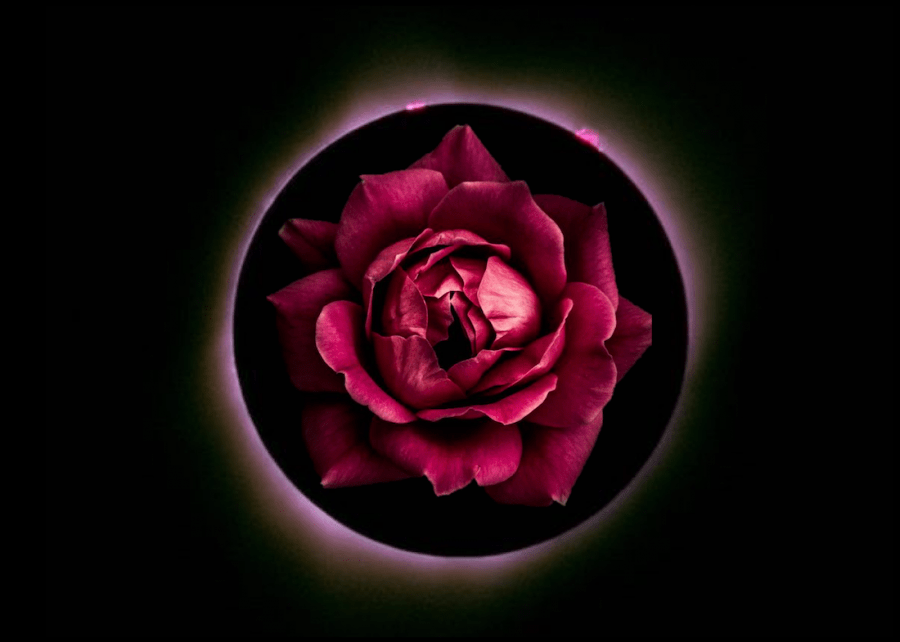
The image is a collage by Chani, via here
 Chinmayee Manjunath
Leave a comment